Updated June 30, 2026 · Pricing and features verified 2026
Key takeaways
- Lemon Learning wins for internal employee adoption across web and desktop apps.
- Pendo wins when product analytics in your own SaaS is the priority.
- Pendo has a free tier up to 500 MAU; Lemon Learning is quote-based with EU data residency.
- They solve different problems: guiding staff through tools versus understanding product usage.
The short version: choose Lemon Learning if your goal is internal employee adoption across business apps; choose Pendo if your goal is understanding and guiding users inside your own SaaS product with deep analytics. These tools overlap on in-app guidance but solve different problems.
Lemon Learning vs Pendo at a glance
| Lemon Learning | Pendo | |
|---|---|---|
| Primary use | Internal app adoption | Product analytics + guidance |
| Pricing | Custom quote | Free up to 500 MAU, then MAU-based |
| Coverage | Web + desktop/legacy | Web/product |
| Analytics | Adoption-focused | Deep product analytics |
| Data residency | EU hosting by default | Standard |
Pricing
Pendo offers a free tier up to 500 monthly active users, then paid plans priced by MAU with unpublished rates. Lemon Learning is quote-based, generally accessible and predictable, with EU data residency. Pendo is easier to try for free; Lemon Learning is built for guided internal rollouts.
Verdict: Pendo for a free start; Lemon Learning for predictable internal-adoption pricing.
Use case and coverage
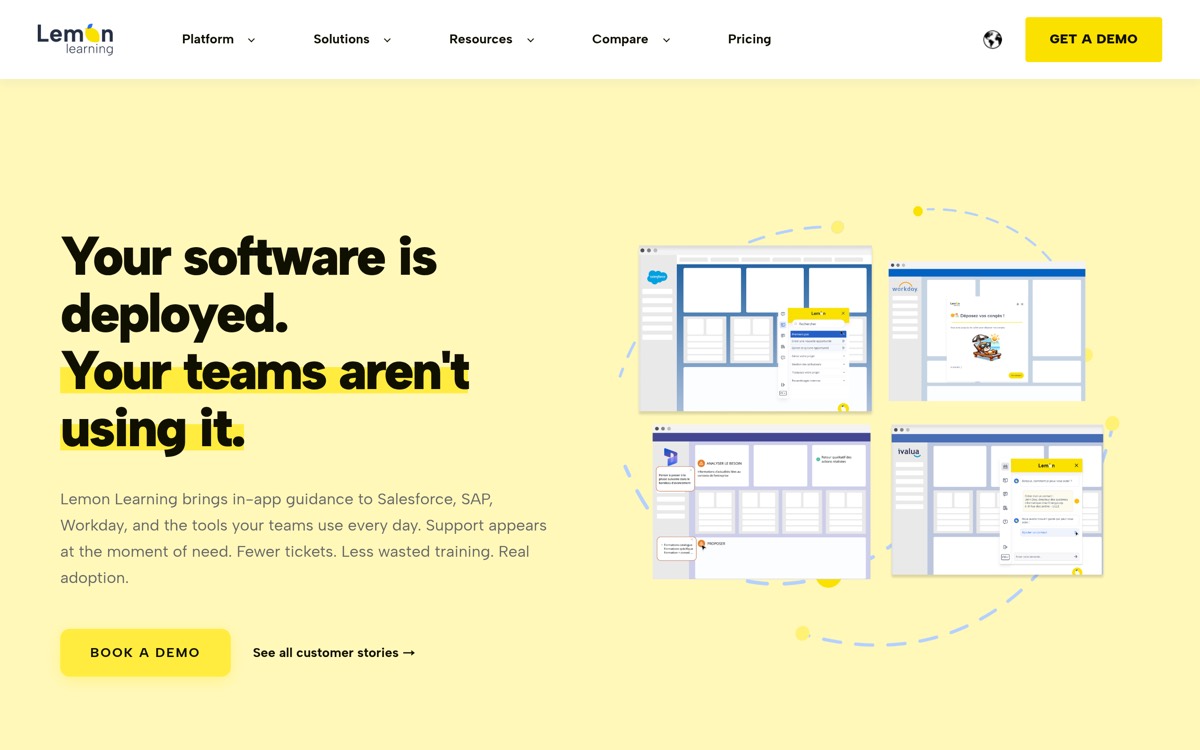
This is the real divide. Lemon Learning guides employees through third-party business apps, Salesforce, Microsoft 365, Workday, and even desktop systems like SAP GUI. Pendo lives inside your own product, combining guidance with analytics to improve feature adoption for your customers. They are strong at different jobs.
Verdict: Lemon Learning for internal employee adoption; Pendo for your own product experience.
Analytics
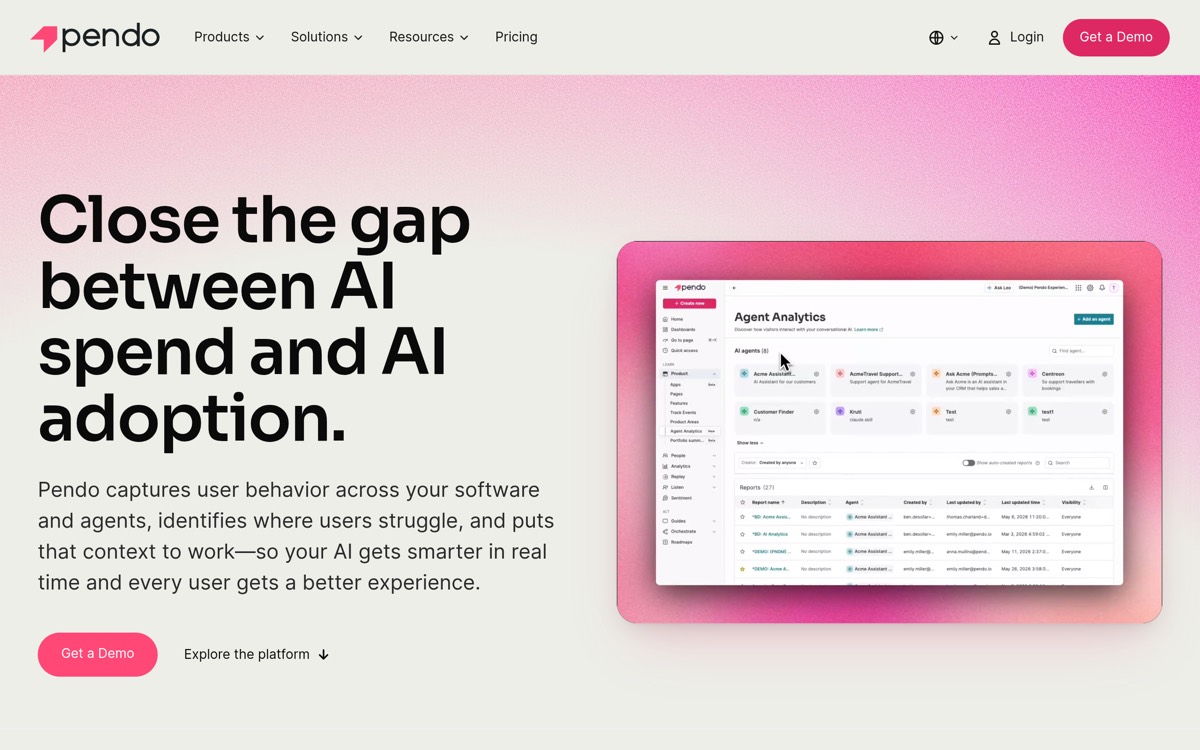
Pendo leads here, with deep product analytics that track feature usage, funnels, and retention. Lemon Learning offers adoption-focused analytics that cover what enablement teams need, though they are less exhaustive than Pendo’s product analytics.
Verdict: Pendo for analytics depth; Lemon Learning for adoption metrics tied to guidance.
Authoring and data residency
Both offer no-code guidance. Lemon Learning adds EU data residency and GDPR compliance by default, which matters for regulated internal rollouts. Pendo is product-centric and standard on residency.
Verdict: Lemon Learning for EU compliance; Pendo for product-team workflows.
Choose Lemon Learning if…
- You need to guide employees through internal business apps.
- You require coverage of complex desktop or legacy systems.
- EU data residency matters.
Choose Pendo if…
- You want to guide and analyze users in your own SaaS product.
- Deep product analytics is a priority.
- You want a free tier to start.
Frequently asked questions
Is Lemon Learning or Pendo better for employee onboarding? Lemon Learning, which is built to guide employees through third-party business apps including desktop systems. Pendo is built for your own product’s users.
Does Pendo have a free plan? Yes, Pendo offers a free tier up to 500 monthly active users. Lemon Learning is quote-based.
Can Pendo guide users in third-party apps? Pendo is designed for your own product, not internal third-party app adoption. For that, Lemon Learning is the better fit.